Tools with boundaries
Typed inputs, pinned definitions, validation, and approval gates. A model response does not grant permission to execute.
The runtime beneath your agent application. Typed tools, explicit approvals, and durable sessions—under your application’s control.
Open source · MIT OR Apache-2.0 · Async Python
Bring your interface.
Keep your storage and policy.
Typed inputs, pinned definitions, validation, and approval gates. A model response does not grant permission to execute.
Durable execution records and original history have distinct roles. Reopen accepted state, surface unknown effects, and resume explicitly.
An in-process async Client API for session metadata, paged history, persisted changes, and supported commands. Build your own UI around it.
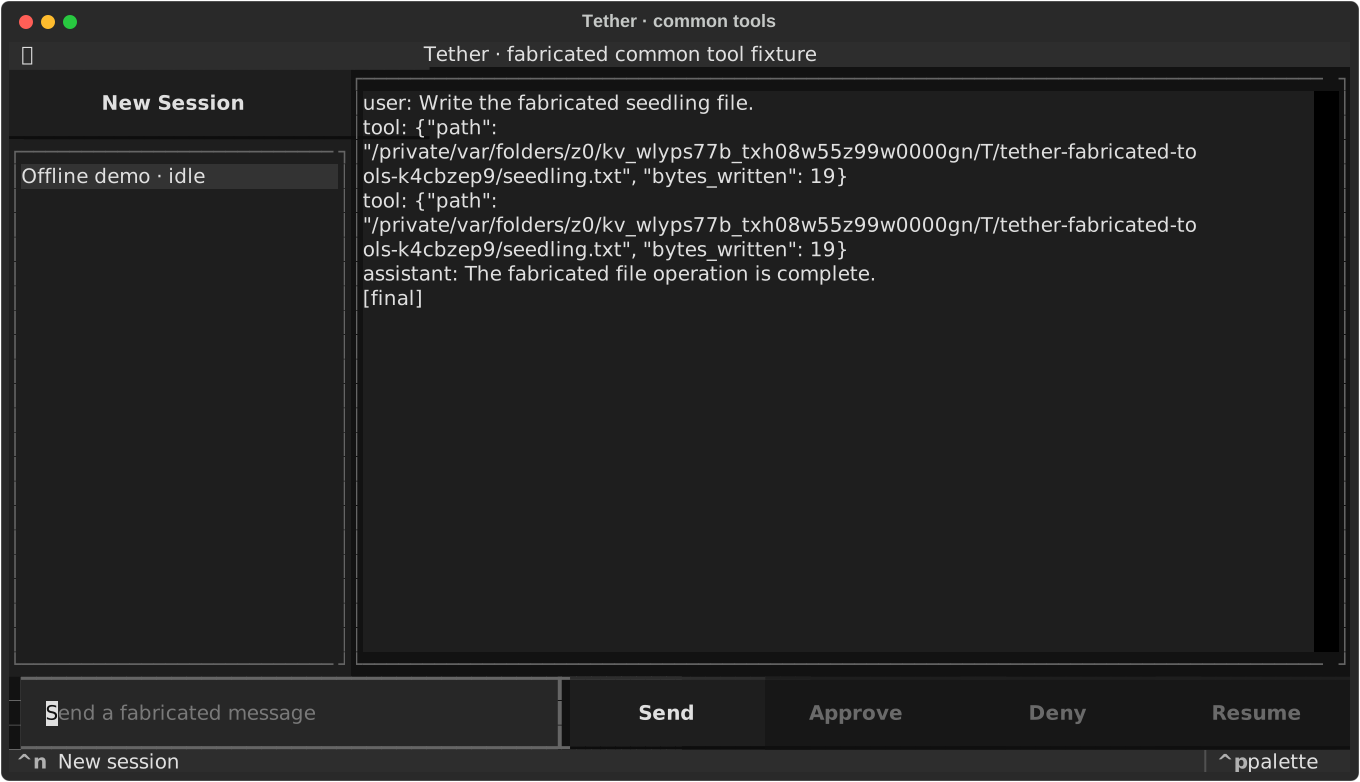
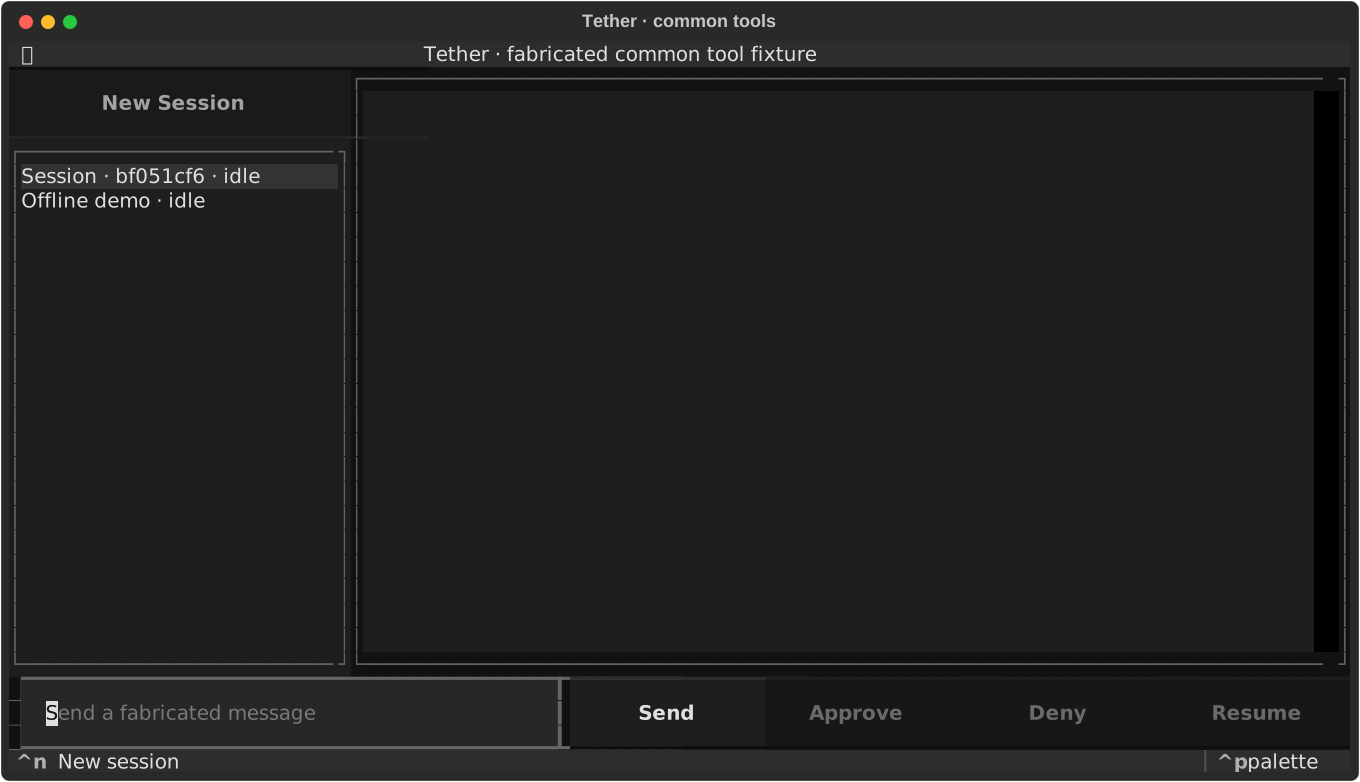
A recorded, offline journey through the installed 0.1.0 terminal UI. A tool waits for approval, the turn completes, and the same local store is reopened.
Python 3.11.17 · macOS arm64
Scripted model · network denied
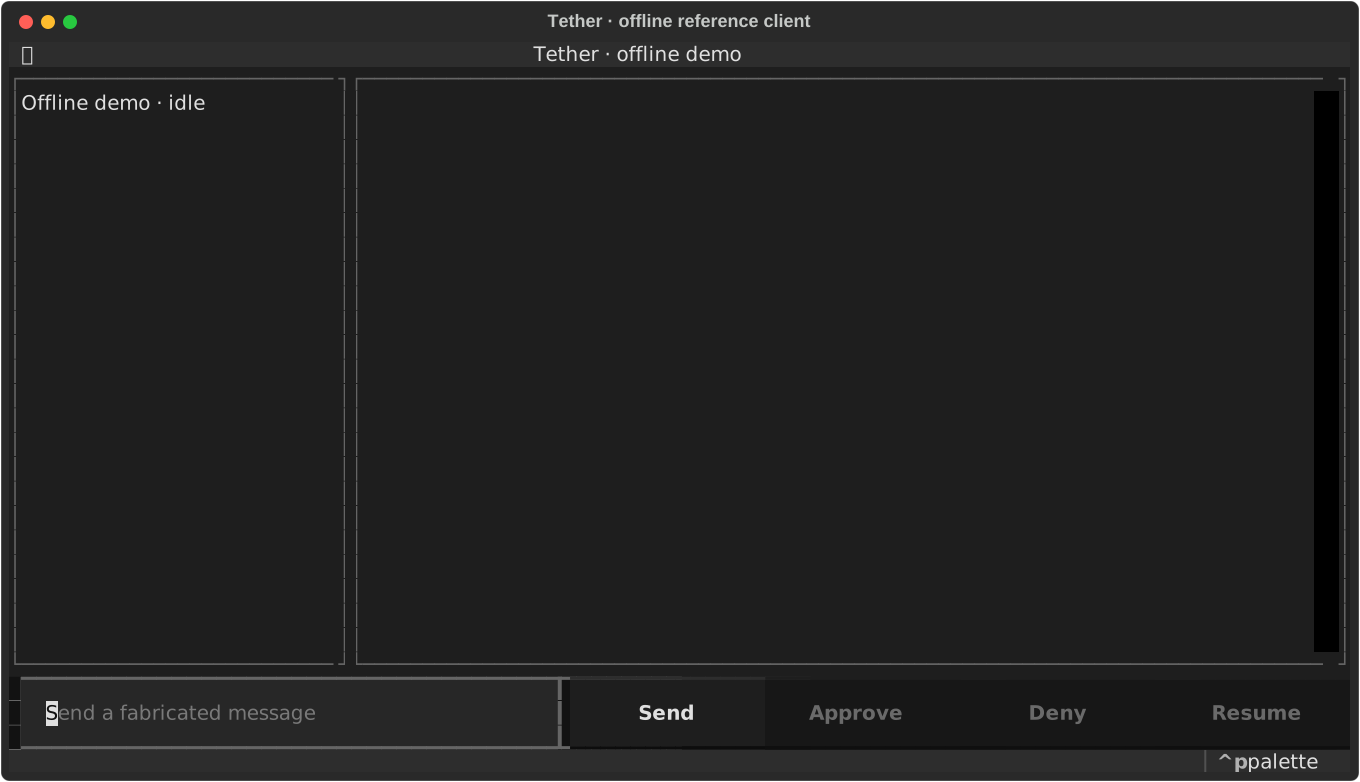
These are screenshots exported from the real Textual UI, driven through its test pilot with state assertions. This walkthrough is a capture, not an interactive agent running in your browser.
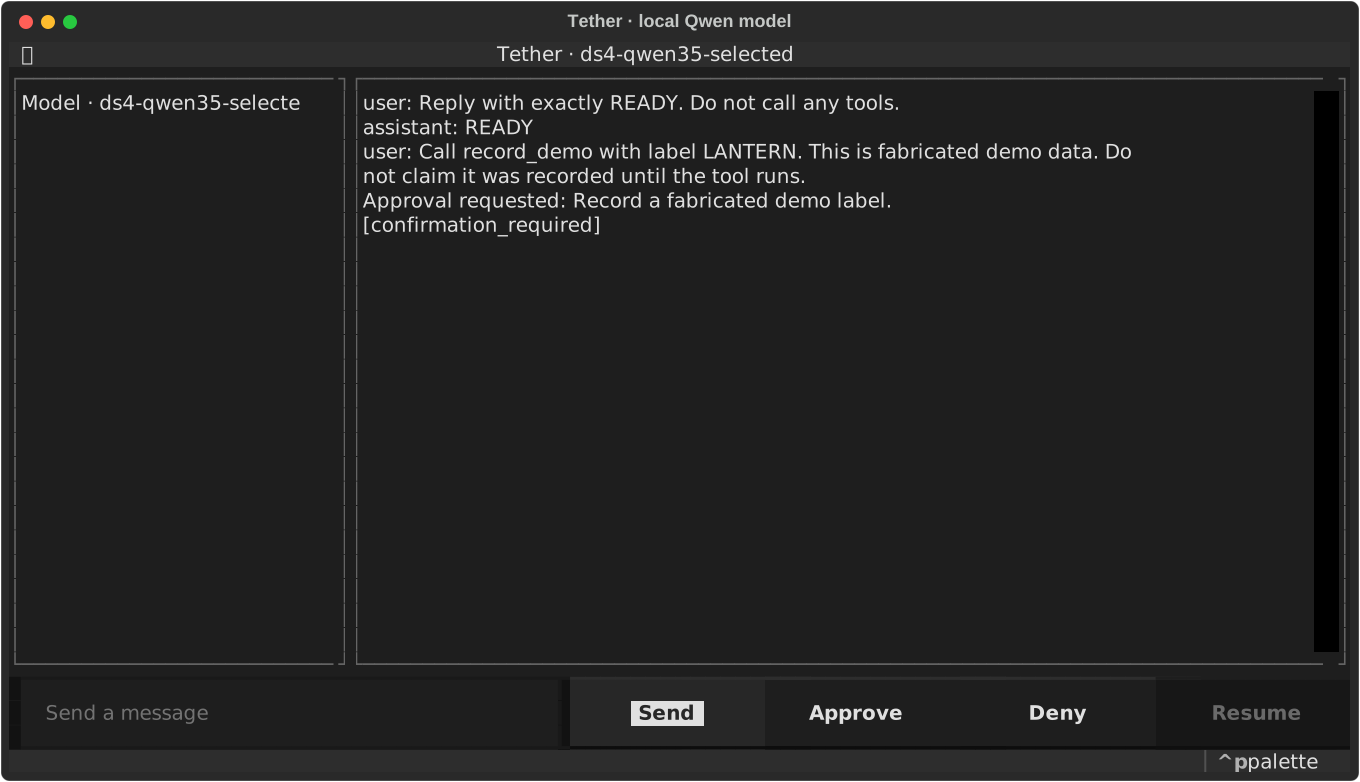
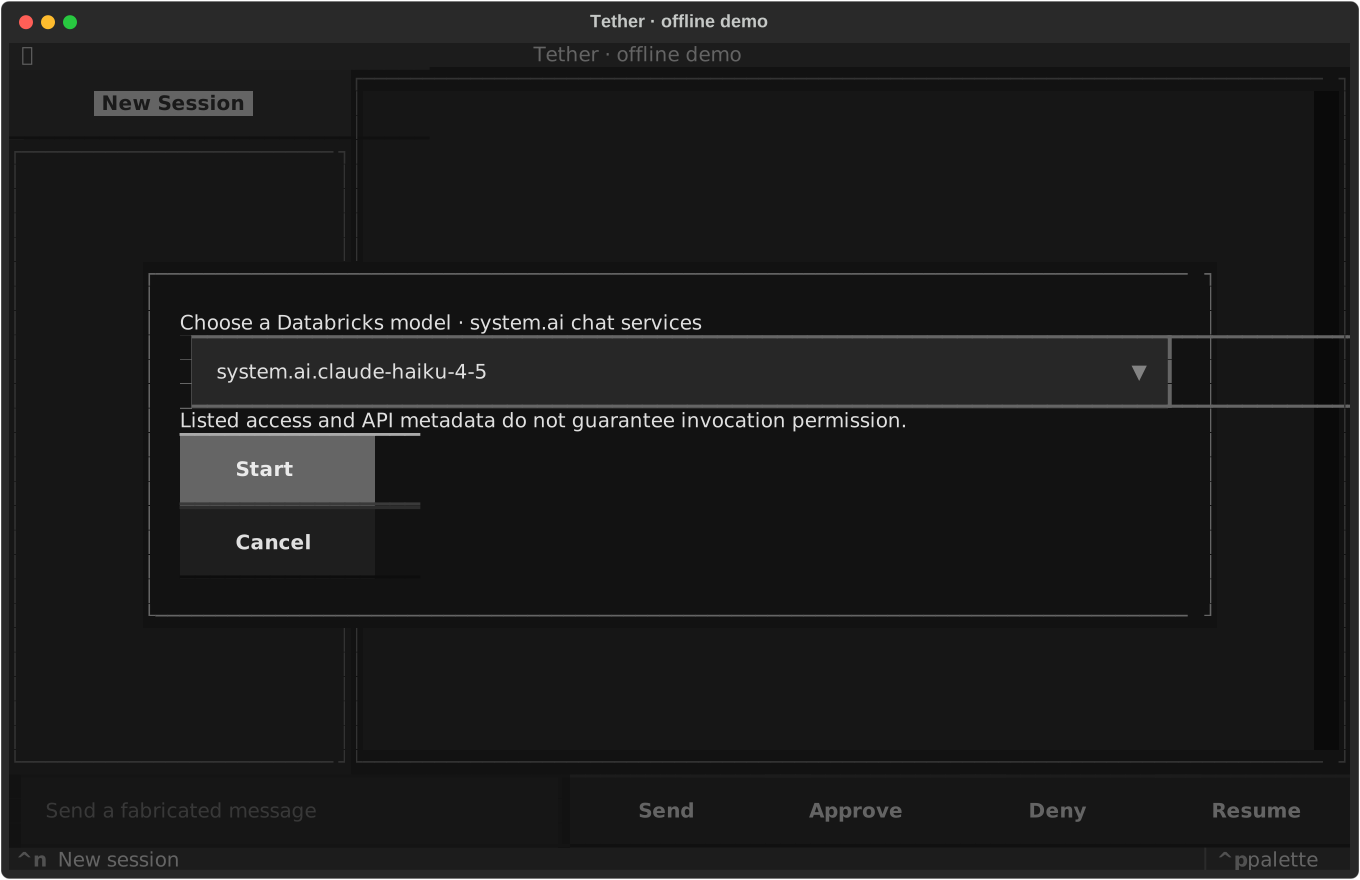
These prompts ran against an already-running local DS4 server with qwen3.8-flash-next-chat. The model returned text, proposed a fabricated tool call, and waited for explicit approval.
Installed 0.1.0 · Python 3.11.17 · macOS arm64
384 output tokens · 128 KiB response cap
Fabricated prompts · explicit loopback endpoint
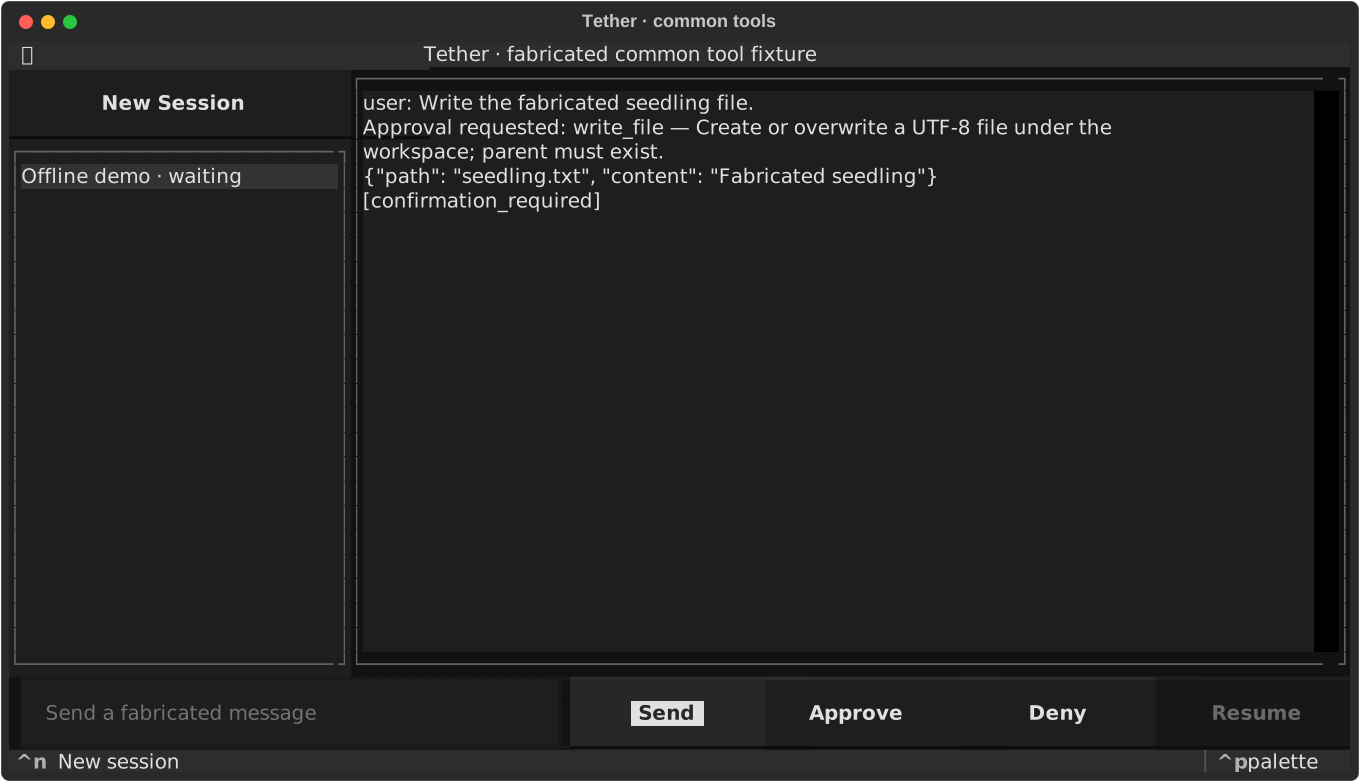
The opt-in reference profile adds bash, local file read/write, web search and page loading. This actual UI capture uses a scripted model and a real fabricated file write. The file exists only after approval.
Unreleased working tree · fabricated data
Bash runs with user permissions; the workspace is not a sandbox.
Live model and search behavior are outside this capture.
The local launcher discovers the served chat model and enables common tools. This actual Qwen journey runs all five tools in a temporary workspace, with approval before each operation.
uv run tether --openai-api-baseurl=http://localhost:18001/v1Unreleased source · actual local inference
Fabricated prompts and file data · public web query/page
Approximate byte estimates · explicit loopback endpoint
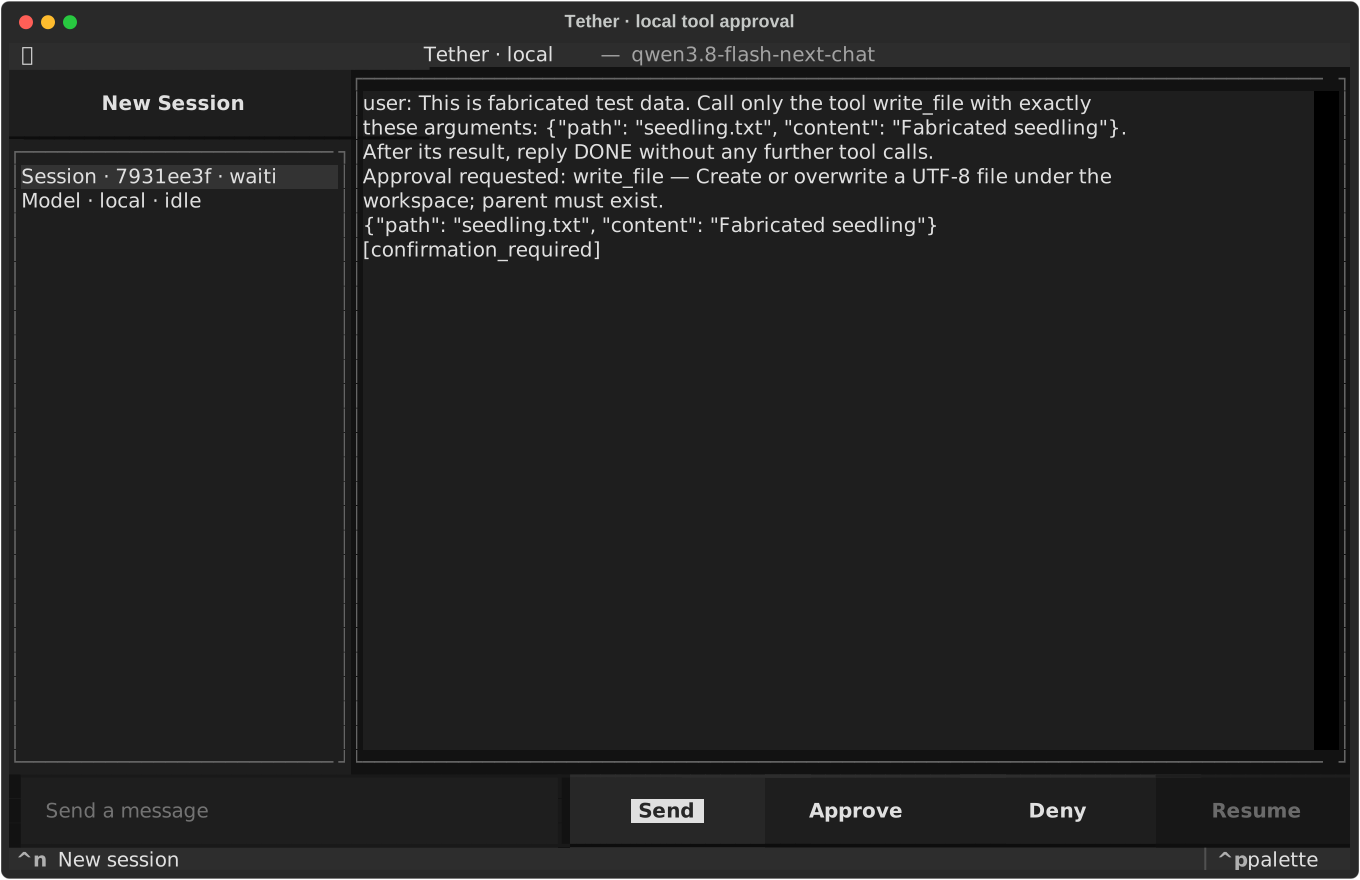
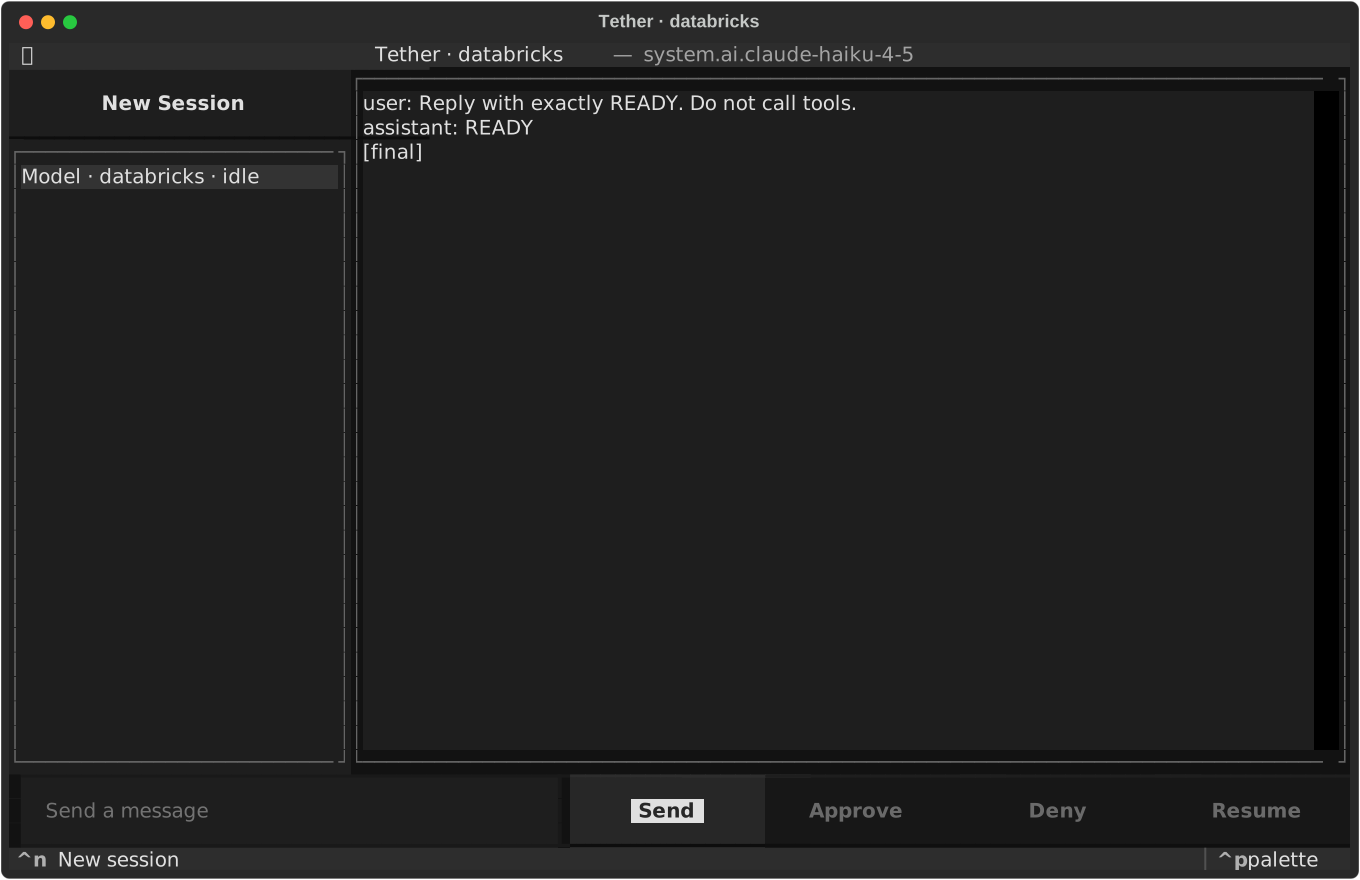
The Databricks launcher derives its gateway URL and authentication from an existing CLI profile. This actual TUI journey discovers 59 system.ai chat models, selects a public model and verifies a fabricated READY response.
uv run tether --databricks-profile=workUnreleased source · actual gateway inference
CLI OAuth user profile · macOS / Python 3.11.17
Catalog metadata does not guarantee invocation permission.
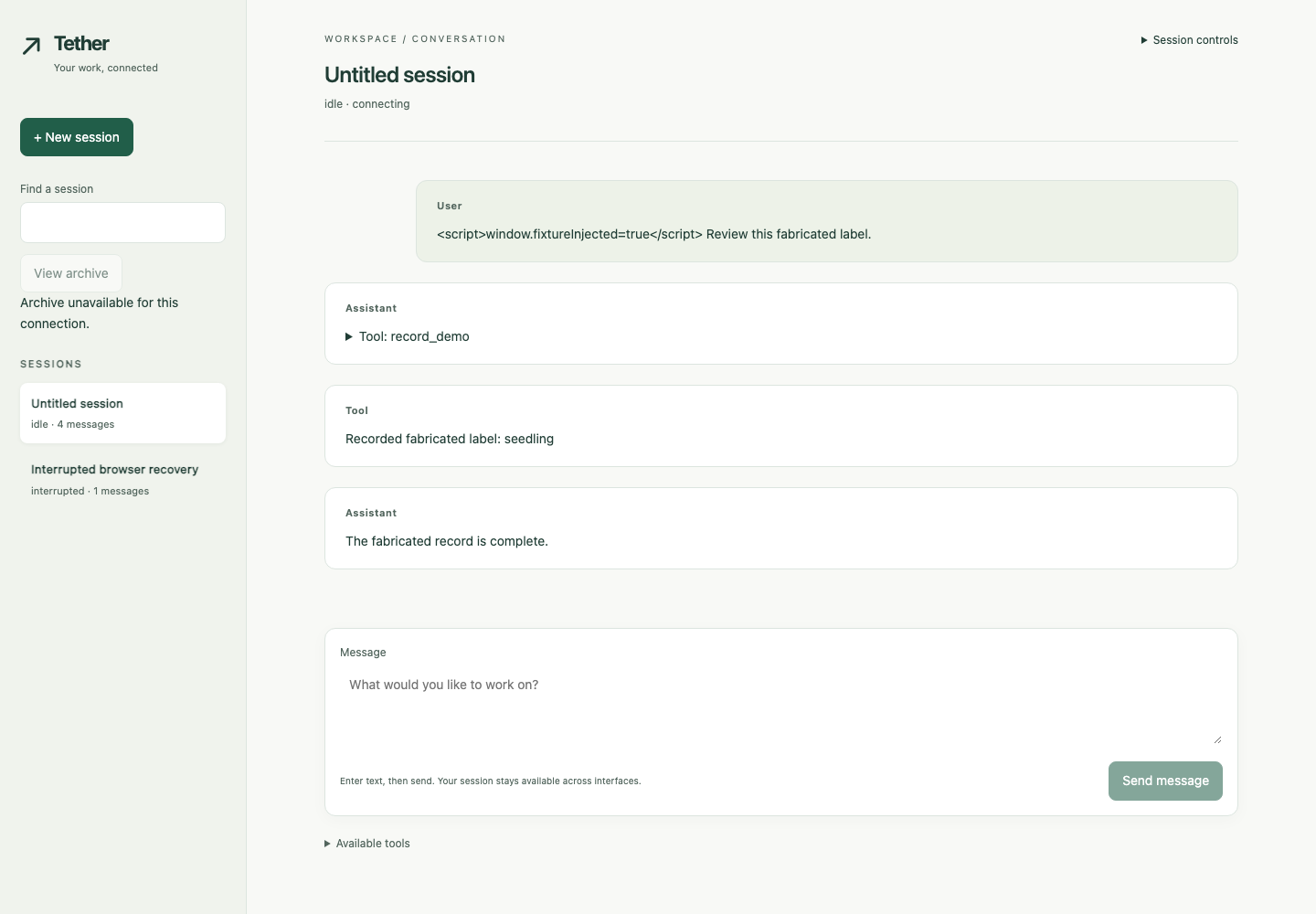
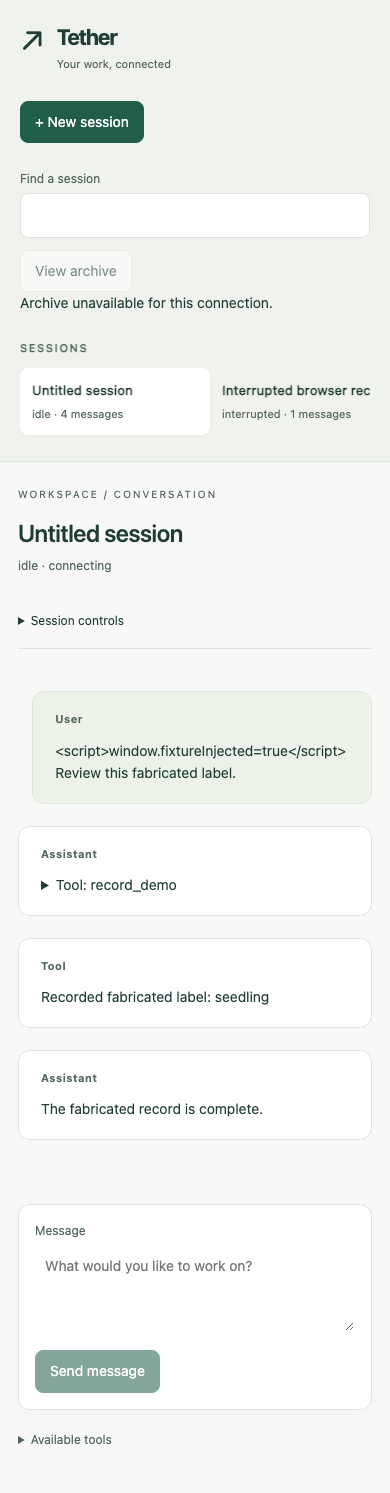
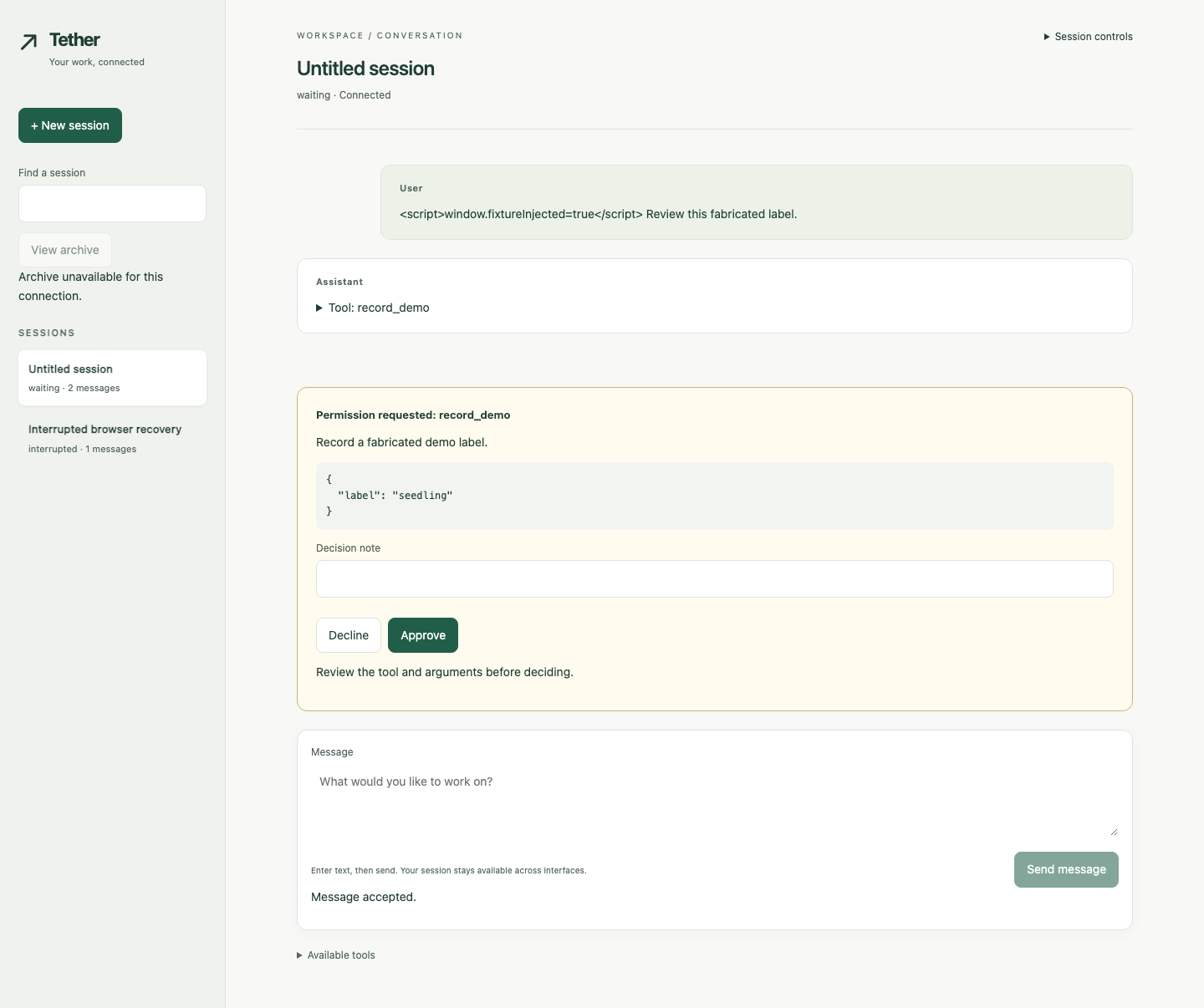
The optional browser application consumes the same public client API through HTTP. This real Chromium capture shows an exact fabricated tool proposal waiting for keyboard approval, followed by committed history after reloading.
Unreleased development source · fabricated model and tools
Nested UI/API mount · desktop and mobile checks
Separate transport, React hooks and replaceable visual components
Install the library for your application, or launch the offline reference client. The demo needs no provider account or model credential.
Read the developer guide ↗uv pip install 'novirhiza-tether==0.1.0'Import as tether. Provider SDKs are excluded from the base installation.
Set up a local model profile ↗
novirhiza-tether on PyPI ↗Support follows the tested versions and profiles. The release evidence records passing checks alongside failed attempts and limits.
Read the qualification receipt ↗